Posts

Showing posts with the label listed

By George We're In Herne Bay

Image
  Welcome back to Herne Bay and following on from my previous  post  detailing the attractive clock tower known simply as The Clock Tower, I turn my attention to another striking building, not Herne Bay Pier nor the Art Deco bandstand but to a distinctive row of Georgian houses that line the promenade, known as Central Parade. Built towards the end of the Georgian period in the 1830s as Herne Bay was experiencing an expansion a terrace of nine homes originally known as Telford Terrace was constructed. Georgian townhouses were usually tall, narrow and white or bare brick and in contrast to the incoming period, Victorian, these were simple in detail featuring large windows and panelled front doors with a fanlight  (window)  above . The most distinctive feature of our row however are their curved fronts. Gorgeous George A mixture of three and four storeys with semi basements (only partly below ground level) and three windows wide Telford Terrace has stuccoed or ren...

Herne Bay Clock Tower

Image
Tick Tock It's Herne Bay Clock When we think of the seaside towns dotted along our beautiful coastline images of grand hotels fronting a sandy beach, flashy amusement arcades with a multitude of vibrant lights beaming into the night, piers packed with tourists taking a short stroll over the waves and the distinctive smell of fish and chips filling the air come to mind but what many will miss is the usually charming, decorative and often centrally, located clock tower informing us that there are many hours of fun to come, that it's time for a rest or indeed that the hour has arrived when we should think of heading home. These handy timekeepers can be found in a long list of our seaside destinations including Margate, Morecambe, Skegness and Weymouth, many erected to commemorate Queen Victoria's jubilee, the Kent town of Herne Bay however has the granddaddy of them all and it is this clock tower that this post is all about. It's Time For Some Perfect Skies In Herne Bay Bu...

St John's Church Wolverhampton

Image
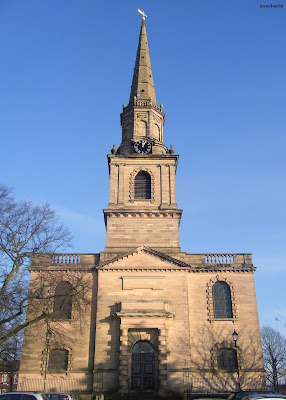
St John's Church What A Classic St John's Church in Wolverhampton is a Grade II Listed church built between 1758-1766. Due to the Industrial Revolution around 1760, Wolverhampton's population had started to grow rapidly and with an increasing Church Of England congregation in the area a new place of worship was required to ease the pressure on St Peter's Church which had become the focal point of the parish, this as well as the already expanding following of other religions across the town ( Wolverhampton became a city in 2000) and the local countryside meant that the Church Of England needed a new place of prayer to attract this widening, religious audience and so a chapel was constructed, it is this chapel that became St John's Church, such was the population growth that St John's was unable to sustain the congregation and a further two churches were built, St Paul's and St George's, St. Paul's was unfortunately demolished in 1960 to make way for a...

The Church Of St. Mary The Virgin Shrewsbury

Image
This post is about The Church Of St. Mary The Virgin in Shrewsbury but before I start let me give you a warning about planning a 'photography trip', the church is famous for it's stained glass windows however not researching the building I wasn't aware of this and therefore didn't take any photos of them, maybe next time, so remember, if you are about to make a photographic day out to first research what's about that way you won't miss out! The Church Of St. Mary The Virgin is the largest church in Shrewsbury and has one of the tallest spires in the country, unfortunately it is now a closed church meaning that it is no longer a place of worship but is under the care of  the Churches Conservation Trust which was established to protect historic churches at risk. Dating back to the Saxon times it is Shrewsbury's only complete Medieval church and is a Grade I Listed building. St. Mary's Church does indeed have a long history, it is believed that there ha...

Albert Hall Mansions London

Image
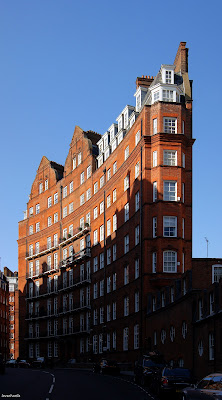
 'An English man's home is his castle', is quite a true statement and for many years when it came to his home, whether it be semi detached, detached or even a bungalow,  he preferred it to be a two storey dwelling. A s a nation we seemed to turn up our noses at living in a multi storey dwelling, the idea was seen as European, those in Paris or Barcelona may have accepted the idea of people living on top of people but over here it was mostly shunned upon, there are however a few, early examples of us doing just that.  The Albert Hall Mansions in Kensington, London is one such example built in 1879 this Victorian tower block rising 10 storeys (including two attic floors) and situated in a very picturesque and exclusive location, opposite both the Royal Albert Hall and Kensington Gardens was one of the first to throw of our reservations of multi storey living. Designed in the Queen Anne style by architect Norman Shaw the building was constructed from red brick and features l...

St Peter's Church Wolverhampton

Image
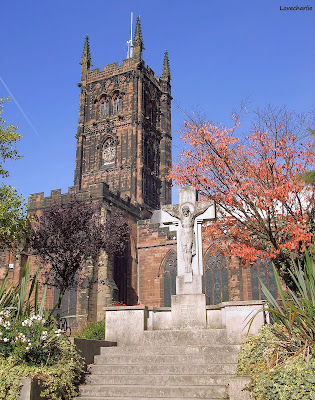
Situated on an elevated piece of land, overlooking both greenery and historic architecture whilst taking pride of place in Wolverhampton City Centre is St. Peter's Church and if the building looks both commanding and picturesque so it should for this has been a religious site for over 1,000 years. In Pride Of Place St. Peter's Church or using its official title St. Peter's Collegiate Church is the city's most iconic building and is of Anglican faith. In AD 985 King Aetherlred II granted land to Lady Wulfrun it is upon this land that a settlement was built, known as Wulfrun Heantune (Heantune meaning high settlement) this title developed into the name Wolverhampton. In AD 994 parts of this land were put aside for the development of a church, and so a collegiate church was built, being a colligate church meant it was free from reign under a bishop, many years later in 1480 the church became a Royal Peculiar meaning it was under direct jurisdiction of the monarch and again...

Scarborough Odeon

Image
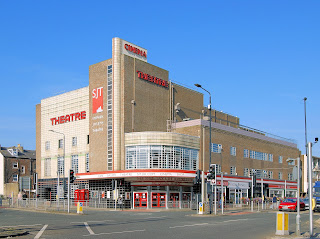
LIGHTS CAMERA ODEON The former Odeon Cinema in Scarborough, built in 1936 is a prime example of the company's 1930s Art Deco designs, with it's tile and brick facade, tall tower with simple detailing, it's large, neon Odeon sign and it's many curves, taking advantage of it's corner plot is has long been admired for being a 'classic' Odeon and as the years have gone by and while many of these original cinemas have been demolished it is a testament that old buildings can be reused and have a purpose in our modern world. The former Scarborough Odeon Cinema is now the Stephen Joseph Theatre and is still entertaining audiences over 85 years since it was first built. The Odeon chain opened it's first cinema in Perry Barr, Birmingham in 1930, despite a world wide depression attendances during the 1930s were high and by the end of that decade the chain had over 250 cinemas dotted around the country. Each week millions flocked to see the latest film by their favo...

Leeds Town Hall

Image
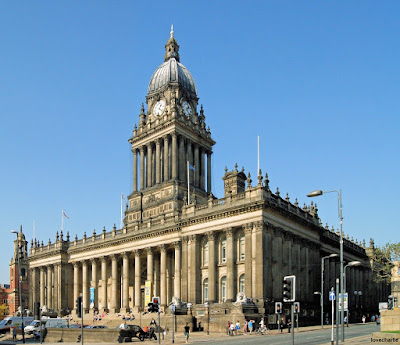
Leeds Town Hall is an excellent example of Victorian Architecture and the civic pride that ensured their public buildings were as grand and as decorative as they could afford. Similar to how a company's internet or website today is their public image, the architecture of towns and cities displayed not only to it's population but to the rest of the country that their town was something to be proud of. In 1850 Leeds Council decided that with their town's growing population (Leeds became a city in 1893) and success in the area that they needed and deserved a new town hall, this combined with the desire to compete with the nearby town of Bradford which was also experiencing growth meant Leeds required something grand, something lavish, something that would indicate to the rest of the country just how important the town had become. Leeds Town Hall A Pillar Of The Community In 1852 a competition was held to design this new symbol of Leeds civic pride, the winner a Mr Cuthbert Bro...
Image
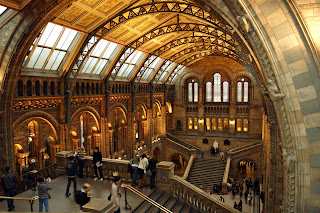
An Evolution In Architecture I have an interest in architecture, just a quick look through this blog should prove that! I don't know when or how it came about but it is something I have been passionate about for quite some time. To be more precise I have an interest in old architecture, Victorian, Edwadian, Art Deco, designs from eras when buildings had detail, I am not adverse to modern architecture but find it as a whole quite bland and boring, although I am aware of some more recent whimsical constructions.  This hall should be in a museum, the Grand Hall of the Natural History Museum in London My favourite design has to be the Natural History Museum in London, a place I have visited many times over the last few years both with family members and on my own. Entrance to the museum is free and if you plan your visit carefully and go during school hours then it is a lot quieter, not only are the displays interesting however but the museum itself is a masterpiece. Alth...