Posts

Showing posts with the label decorative

Herne Bay Seafront

Image
 Herne Bay is a coastal town in Kent, it isn't as flashy as nearby Margate and Ramsgate or as picturesque as Whitstable but what it is, is a more relaxed, quieter destination somewhere to take things easy. where life seems to slow down and if that is what you are after then you could do a lot worse than spend some time in Herne Bay. One of the main attractions Herne Bay has to offer is its pier, the original pier was nothing more than a mooring platform that stretched out into the water but during the late Victorian era as holidays became more and more popular the town along with its pier were developed and expanded so much so that by 1897 Herne Bay was home to the country's second longest pier. Throughout the Edwardian era and early C20 the pier was renovated several times accumulating in a grand structure featuring a pavilion theatre. Following World War II the pier seemed to fall on harsh times and on January 11 1978 a large storm destroyed a large section of the structure l...

By George We're In Herne Bay

Image
  Welcome back to Herne Bay and following on from my previous  post  detailing the attractive clock tower known simply as The Clock Tower, I turn my attention to another striking building, not Herne Bay Pier nor the Art Deco bandstand but to a distinctive row of Georgian houses that line the promenade, known as Central Parade. Built towards the end of the Georgian period in the 1830s as Herne Bay was experiencing an expansion a terrace of nine homes originally known as Telford Terrace was constructed. Georgian townhouses were usually tall, narrow and white or bare brick and in contrast to the incoming period, Victorian, these were simple in detail featuring large windows and panelled front doors with a fanlight  (window)  above . The most distinctive feature of our row however are their curved fronts. Gorgeous George A mixture of three and four storeys with semi basements (only partly below ground level) and three windows wide Telford Terrace has stuccoed or ren...

Herne Bay Clock Tower

Image
Tick Tock It's Herne Bay Clock When we think of the seaside towns dotted along our beautiful coastline images of grand hotels fronting a sandy beach, flashy amusement arcades with a multitude of vibrant lights beaming into the night, piers packed with tourists taking a short stroll over the waves and the distinctive smell of fish and chips filling the air come to mind but what many will miss is the usually charming, decorative and often centrally, located clock tower informing us that there are many hours of fun to come, that it's time for a rest or indeed that the hour has arrived when we should think of heading home. These handy timekeepers can be found in a long list of our seaside destinations including Margate, Morecambe, Skegness and Weymouth, many erected to commemorate Queen Victoria's jubilee, the Kent town of Herne Bay however has the granddaddy of them all and it is this clock tower that this post is all about. It's Time For Some Perfect Skies In Herne Bay Bu...

The Church Of St. Mary The Virgin Shrewsbury

Image
This post is about The Church Of St. Mary The Virgin in Shrewsbury but before I start let me give you a warning about planning a 'photography trip', the church is famous for it's stained glass windows however not researching the building I wasn't aware of this and therefore didn't take any photos of them, maybe next time, so remember, if you are about to make a photographic day out to first research what's about that way you won't miss out! The Church Of St. Mary The Virgin is the largest church in Shrewsbury and has one of the tallest spires in the country, unfortunately it is now a closed church meaning that it is no longer a place of worship but is under the care of  the Churches Conservation Trust which was established to protect historic churches at risk. Dating back to the Saxon times it is Shrewsbury's only complete Medieval church and is a Grade I Listed building. St. Mary's Church does indeed have a long history, it is believed that there ha...

Albert Hall Mansions London

Image
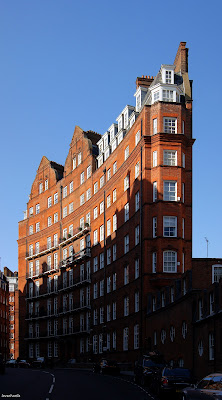
 'An English man's home is his castle', is quite a true statement and for many years when it came to his home, whether it be semi detached, detached or even a bungalow,  he preferred it to be a two storey dwelling. A s a nation we seemed to turn up our noses at living in a multi storey dwelling, the idea was seen as European, those in Paris or Barcelona may have accepted the idea of people living on top of people but over here it was mostly shunned upon, there are however a few, early examples of us doing just that.  The Albert Hall Mansions in Kensington, London is one such example built in 1879 this Victorian tower block rising 10 storeys (including two attic floors) and situated in a very picturesque and exclusive location, opposite both the Royal Albert Hall and Kensington Gardens was one of the first to throw of our reservations of multi storey living. Designed in the Queen Anne style by architect Norman Shaw the building was constructed from red brick and features l...

St Peter's Church Wolverhampton

Image
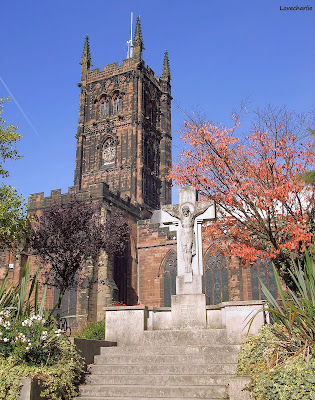
Situated on an elevated piece of land, overlooking both greenery and historic architecture whilst taking pride of place in Wolverhampton City Centre is St. Peter's Church and if the building looks both commanding and picturesque so it should for this has been a religious site for over 1,000 years. In Pride Of Place St. Peter's Church or using its official title St. Peter's Collegiate Church is the city's most iconic building and is of Anglican faith. In AD 985 King Aetherlred II granted land to Lady Wulfrun it is upon this land that a settlement was built, known as Wulfrun Heantune (Heantune meaning high settlement) this title developed into the name Wolverhampton. In AD 994 parts of this land were put aside for the development of a church, and so a collegiate church was built, being a colligate church meant it was free from reign under a bishop, many years later in 1480 the church became a Royal Peculiar meaning it was under direct jurisdiction of the monarch and again...

Art Deco The Deliciously Detailed To The Sublime Streamline

Image
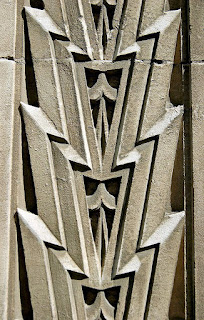
  Art Deco is a style that became popular following the Paris World Fair of 1925, it's official French title is somewhat longer, Exposition Internationale Des Arts Decoratifs Et Industriels Modernes, translating into English as the International Exhibition Of Modern Decorative And Industrial Arts, this exhibition was designed to highlight the Style Moderne and covered architecture, interior design, furniture and jewellery, it was a big success attracting over 16 million visitors during it's 7 month run. The name Art Deco which many years later became the collective term for this style came from the title of this World Fair. Art Deco Strikes Back At George's Dock Building Liverpool The style was heavily influenced by ancient cultures and archaeology taking hints from the Egyptian, Roman and the Aztec eras and by combining these with modern craftmanship together they created elaborate geometric patterns, chevrons and zig zags and often featured abstract representations of all...

Scarborough Architecture

Image
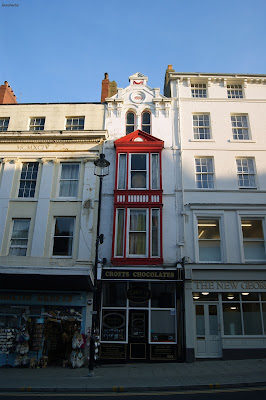
Scarborough is a town situated along the North Sea Coast in North Yorkshire, England. Following the discovery of mineral water flowing from its cliffs in the 1620s the historical town became the country's first seaside resort and with beautiful sandy beaches and picturesque cliffs Scarborough continues to be a popular destination with holidaymakers to this day.  High upon the cliff head sits Scarborough Castle which has looked out across the town and sea since the 1130s, the old town is nestled below along its harbour and marina while its town centre is found adjacent on an elevated stretch of coast. Scarborough has managed to be both an evergreen tourist spot while managing to maintain a large amount of its historic architecture and it is that which this post is dedicated to, so come with me and explore some of the interesting buildings Scarborough has to offer! Information on buildings can be difficult to find especially if they aren't well known or classed as an important si...

Photography At Home

Image
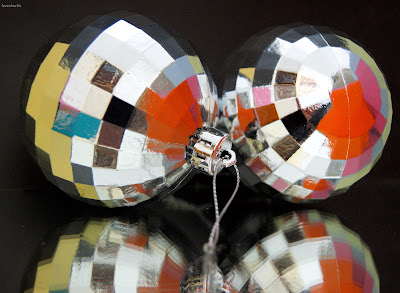
  Photography is obviously a passion of mine and if you have looked through my blog you will we see how useful it has been combining it with my love of old architecture, in fact the two came together quite early on. For many years I had an account on Flickr, a photo sharing site which helped increase my interest in both subjects, it's always helpful to discuss and comment with others on a shared interest. Buildings in theory should be easy to photograph, as long as the light is right and you can find a good angle then it should be plain sailing, my tip is to try and find an unusual angle or something unique about the architecture to help create an interesting composition.  My passion for photography expanded to include items around the home, everyday objects that when viewed differently become interesting and with the English weather being what it is, it was also handy when it was dull outside. Many of the photographs I have taken at home are shot in my bedroom using a mirror ...

Leeds Town Hall

Image
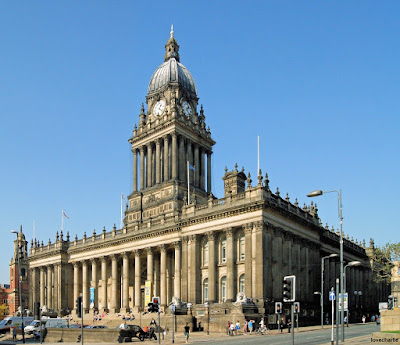
Leeds Town Hall is an excellent example of Victorian Architecture and the civic pride that ensured their public buildings were as grand and as decorative as they could afford. Similar to how a company's internet or website today is their public image, the architecture of towns and cities displayed not only to it's population but to the rest of the country that their town was something to be proud of. In 1850 Leeds Council decided that with their town's growing population (Leeds became a city in 1893) and success in the area that they needed and deserved a new town hall, this combined with the desire to compete with the nearby town of Bradford which was also experiencing growth meant Leeds required something grand, something lavish, something that would indicate to the rest of the country just how important the town had become. Leeds Town Hall A Pillar Of The Community In 1852 a competition was held to design this new symbol of Leeds civic pride, the winner a Mr Cuthbert Bro...

Wolverhampton Architecture

Image
My hometown of Wolverhampton is a city in England, with a population of around 250,000 it is the 13th largest city in the country, located about 15 miles north west of England's second largest city, Birmingham, it forms the second largest area of the West Midlands Conurbation with a combined population of 2.5 million. Wolverhampton received it's city status in 2000 earning it's title as the Millennium City, it originally grew as a market town serving the woollen trade, due to it's location close to the birthplace of industry, Ironbridge, the town expanded rapidly during the Industrial Revolution. More recently the production of cars and motorbikes became an important factor in keeping the town on it's feet and today engineering and education are two of it's major employers. Wolves, Wolvo, Wolverhampton, Home As with any city with a long history Wolverhampton has an interesting array of architecture covering all eras over the last few centuries, her...